
Intruder Alarm Systems: Types, Grades & Costs
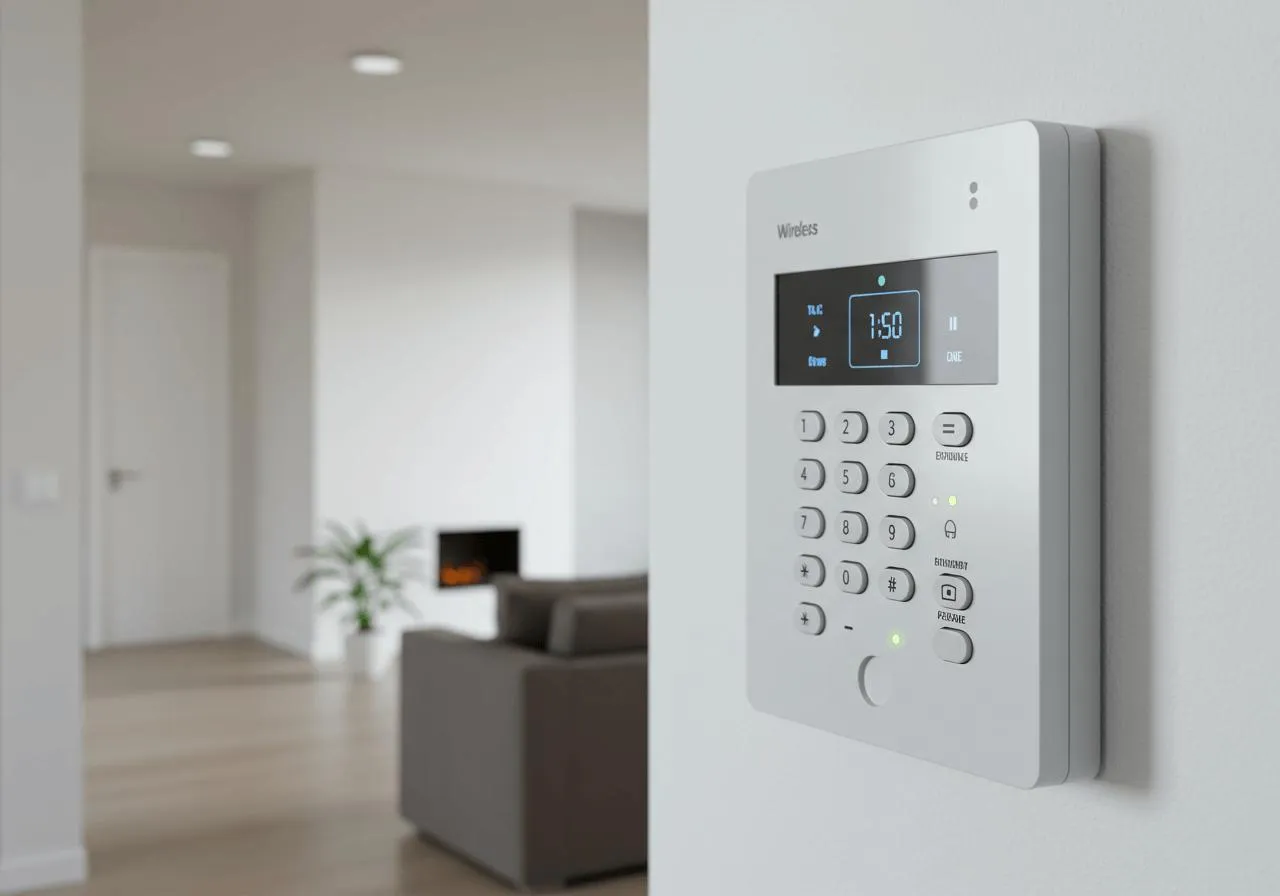
Choosing an intruder alarm system comes down to four decisions: wired or wireless, monitored or bells-only, the security grade your insurer expects, and whether the system needs to cover a home or a commercial site. Get those right and the rest — sensors, app control, signalling — follows naturally.
Last updated: June 2026
An intruder alarm system — still widely called a burglar alarm — is the layer of security that does its work whether you are on site or not, and the right specification depends far more on your property and your insurer than on any single brand. For commercial premises in particular, the choice carries compliance weight: get the grade or the monitoring wrong and a claim can be refused. In our experience fitting systems across Orpington, Kent and Greater London, the businesses that choose well are the ones that start with risk and requirements, not the kit. This guide walks through how to do exactly that.
Wired vs wireless intruder alarms
Every intruder alarm begins with how its parts talk to each other. A wired alarm system connects sensors, keypads and sirens with fixed cabling. It is reliable, well suited to larger or permanent commercial installations, and needs little ongoing attention once in place — there are no sensor batteries to change. The trade-off is the install: an engineer has to route cable, which takes longer and costs more, and it is disruptive in an occupied building.
A wireless intruder alarm uses radio signalling between battery-powered devices. It is quicker to fit, far less invasive, and ideal where chasing cable into walls is impractical — listed buildings, fitted-out offices, or a home you would rather not have drilled. Modern wireless systems from the likes of Texecom, Pyronix and RISCO are genuinely robust; the only real maintenance is replacing device batteries every few years. Many commercial sites end up with a hybrid: a wired backbone extended with wireless devices when the premises grows, which avoids a full rewire.
For most homes and smaller commercial units, a quality wireless system is the sensible default. For large or high-risk commercial sites, a wired or hybrid system usually wins on resilience.
Monitored vs unmonitored — and how an ARC works
The other foundational choice is what happens when the alarm is triggered. An unmonitored, or “bells-only”, system sounds a siren locally and nothing more. It is cheaper, has no ongoing fees, and relies on someone nearby hearing it and acting. For a low-risk home that may be enough; for a commercial property it rarely is.
A monitored alarm system signals an Alarm Receiving Centre (ARC) — a 24/7 facility that verifies the activation and escalates it. Depending on the service level, the ARC contacts your keyholders, dispatches a guarding response, or requests police attendance under a unique reference number. Verification cuts false alarms, which is precisely what keeps a system’s police response status intact. Signalling is handled by a dual-path connection (paths such as Dualcom or Emizon) so the alarm still reports even if a line is cut.
Insurers frequently make monitoring a condition of cover for commercial premises, and many offer a premium discount where a graded, monitored system is professionally installed and maintained. If your business holds stock, cash or sensitive data, monitoring is not really optional.
Intruder alarm grades explained (Grade 2 vs Grade 3)
UK intruder alarms are classified under BS EN 50131 into four security grades based on the level of threat they are designed to resist. This is the single most important number on a commercial specification, because it is usually your insurer — not you — who decides which grade you need.
| Grade | Risk level | Typical use |
|---|---|---|
| Grade 1 | Low | Basic domestic, low-value contents |
| Grade 2 | Low to medium | Most homes and lower-risk commercial units |
| Grade 3 | Medium to high | Higher-value commercial premises; commonly insurer-mandated for business |
| Grade 4 | High | High-value or high-risk sites (e.g. jewellers, data facilities) |
The practical difference between Grade 2 and Grade 3 is intruder sophistication. Grade 2 assumes a burglar with basic knowledge; Grade 3 assumes someone who understands alarm systems and will attempt to defeat them — so Grade 3 detectors must spot tampering and masking (something placed over the lens), and the system needs more rigorous self-monitoring. Most commercial insurance policies for anything beyond a small office specify Grade 3. Always confirm the required grade with your insurer in writing before you commission a system.
Sensor types: PIR, magnetic contacts, glass-break and shock
A system is only as good as its detection, and most installations combine sensor types for layered protection. The common detectors are:
- PIR (passive infrared) motion sensors — detect body heat moving through a space; the workhorse of interior detection.
- Magnetic door and window contacts — trigger the moment a protected door or window is opened.
- Glass-break sensors — listen for the specific frequency of breaking glass, useful for shopfronts and ground-floor windows.
- Shock and vibration sensors — register impact on walls, doors or safes before entry is achieved.
- Dual-technology detectors — combine PIR with microwave to cut false alarms in difficult environments such as warehouses.
Layering matters because it forces an intruder to defeat several different technologies at once. On a commercial site we would typically protect the perimeter (contacts and glass-break) and the interior (PIR and dual-tech) so that a breach is caught at more than one point.
Choosing an intruder alarm system for a commercial property
Commercial specification is a different exercise from a domestic one. Alongside the grade and monitoring decisions above, a business intruder alarm should be planned around how the building is actually used — opening hours, multiple keyholders, part-set zones so a night-shift area stays live while reception is occupied, and integration with your other systems. A monitored intruder alarm that talks to your CCTV system gives the ARC visual verification, and tying it into access control means entry events and alarm events sit in one audit trail.
For multi-site operators, centralised management and consistent grading across locations keep both insurers and facilities teams happy. Compliance also matters: a system installed and maintained by an SSAIB-approved company is what most insurers and the police expect to see. If you keep maintenance and testing records in a digital security logbook, you have the evidence trail ready for any claim or audit. We design commercial systems around exactly this — see our intruder detection services for how the pieces fit together, and our RISCO systems for a platform that scales from a single unit to a multi-site estate. You can see the wider range of manufacturers we work with on our technology partnerships hub.
How much does an intruder alarm cost to install?
Installed cost depends on system grade, the number of zones and sensors, wired versus wireless, and whether you add monitoring. As an indicative guide for the UK in 2026:
| System | Indicative installed cost |
|---|---|
| Domestic wireless (Grade 2, few zones) | £500 – £1,200 |
| Larger home / small commercial unit | £1,200 – £2,500 |
| Commercial Grade 3, multi-zone | £2,500 – £5,000+ |
| ARC monitoring (ongoing) | £100 – £300 per year |
Treat these as ballpark figures rather than a quote — the variables that move the price most are the number of detectors, the grade your insurer requires, the signalling path for monitoring, and whether cabling is needed. A site survey is the only way to price accurately, and it usually pays for itself by sizing the system correctly rather than over- or under-specifying it.
Keeping false alarms down and the system maintained
A system that cries wolf is worse than no system at all — repeated false activations erode confidence and can cost you your police response status. Most false alarms trace back to a handful of avoidable causes: pets triggering standard PIRs (use pet-tolerant detectors), poorly sited sensors near heat sources or moving stock, low device batteries on wireless systems, and users unsure how to part-set the alarm. A well-designed system and a brief handover for staff prevent the majority of them.
Beyond that, an annual service is both good practice and, for monitored or graded systems, usually a maintenance requirement under your insurance and SSAIB approval. A service checks detectors, batteries, signalling paths and the control panel, and keeps your compliance records current. Logging each visit in a digital security logbook means the evidence is there when an insurer or auditor asks for it.
When to call an engineer
If you are specifying a new system, upgrading to meet an insurer’s grade requirement, or your current burglar alarm is unreliable or no longer monitored, that is the point to bring in a professional installer. A qualified engineer will carry out a security risk assessment, confirm the grade and monitoring your insurer expects, and design a system that covers the real vulnerabilities rather than a box of sensors. Triple Star Fire and Security is BAFE-accredited and SSAIB-approved, and we install and maintain intruder alarms for homes and businesses across Kent and Greater London.
Frequently asked questions
What is the best burglar alarm system in the UK?
There is no single best system — the right choice depends on your property, your risk level and your insurer’s requirements. For UK installations we rate platforms from Texecom, Pyronix, Honeywell Galaxy and RISCO for their reliability and grading options. The “best” system is one specified to the correct grade and professionally installed and maintained.
What is the difference between Grade 2 and Grade 3 intruder alarm systems?
Grade 2 is designed to resist a burglar with basic knowledge and suits most homes and lower-risk commercial units. Grade 3 assumes an intruder who understands alarm systems, so its detectors must spot tampering and masking and the system self-monitors more rigorously. Most commercial insurance policies specify Grade 3.
What is the difference between a burglar alarm and an intruder alarm?
The terms are used interchangeably in everyday speech. Strictly, “intruder alarm” is the broader industry term covering interior, perimeter and external detection, while “burglar alarm” usually refers to systems protecting against break-ins to a building. Functionally, for most homes and businesses, they describe the same thing.
How much does it cost to install an intruder alarm?
A domestic wireless system typically costs £500 to £1,200 installed, while a graded commercial system runs from around £2,500 upwards depending on size and grade. Monitoring adds roughly £100 to £300 a year. A site survey gives an accurate figure.
Do I need a monitored alarm system for my business?
Often yes. Many commercial insurers make ARC monitoring a condition of cover, and it is what enables a verified police or guarding response. If your premises holds stock, cash or sensitive data, monitoring is strongly recommended.
If your intruder alarm needs specifying, upgrading or monitoring, call Triple Star Fire & Security on 0203 189 1960, email info@tsfands.com, or use our contact page. Triple Star Fire & Security, Unit 2, Murray Business Centre, Murray Road, Orpington, BR5 3RE.
Sources
BSI — BS EN 50131 intruder alarm standards
SSAIB — security systems certification
NSI — security industry standards